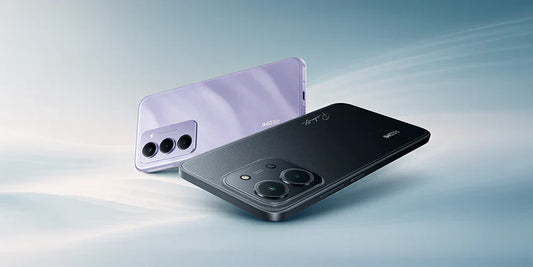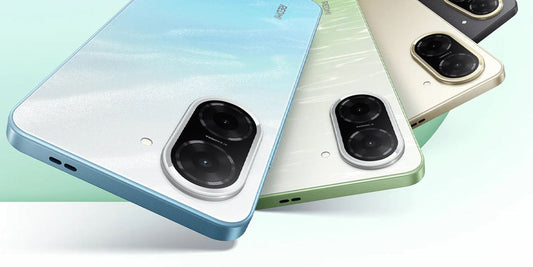





Discover the POCO X8 PRO series. Flagship performance in the mid-range
POCO has accustomed us to the fact that it feels right at home in the mid-range segment. However, what has been prepared as part of the latest POCO X8 Pro series goes beyond the framework of ordinary evolution. We are dealing with the launch of two devices: the base POCO X8 Pro and the uncompromising giant, the POCO X8 Pro Max. These are phones that challenge far more expensive designs, offering specifications that the competition in this price range can only dream of.
Here is a detailed look at the new family of devices that will redefine the meaning of “value for money”.
Display: Cinematic quality and Wet Touch 2.0 technology
Both models are equipped with top-class AMOLED panels that display over 68 billion colors (DCI-P3 color gamut). What stands out first is the brightness, both smartphones reach a stunning peak of 3500 nits. This means that even in full July sunlight, the image remains readable and high in contrast.
• POCO X8 Pro features a display measuring 6.59 inches with a high resolution of 2756 × 1268 px.
• POCO X8 Pro Max goes a step further with a 6.83-inch panel, becoming a true multimedia center.
It is worth paying attention to protection, Corning® Gorilla® Glass 7i is used here, guaranteeing high resistance to scratches and drops. Additionally, Wet Touch 2.0 technology allows precise screen control even with wet hands or in the rain, which, combined with the IP68 certification (complete dust resistance and water resistance), makes these phones devices for special tasks.

Performance: Next-generation processors and UFS 4.1
Under the hood of the POCO X8 Pro series lies pure computing power. Xiaomi opted for the latest MediaTek chips, which, combined with fast LPDDR5X memory and the latest UFS 4.1 storage standard, ensure lightning-fast operation of the HyperOS 3 system.
1. POCO X8 Pro Max: Powered by the mighty MediaTek Dimensity 9500s processor with the Immortalis-G925 MC11 graphics unit. This combination steps on the heels of the most expensive flagships in benchmarks. To keep that power under control, the POCO 3D IceLoop cooling system has been applied, preventing overheating during intensive gameplay.
2. POCO X8 Pro: The heart of the device is the Dimensity 8500-Ultra (4nm). It is a chip optimized for energy efficiency while maintaining top-tier smoothness in apps and games.
With gamers in mind, the Max model offers a touch sampling rate of up to 2560 Hz, which translates into nearly instant response in online games.

Battery: Record capacities and fast charging
This is where the POCO X8 Pro series crushes the entire market competition. At a time when 5000 mAh is the standard, POCO pushes the limits.
• POCO X8 Pro Max received a gigantic battery with a capacity of 8500 mAh. This is a value that, with standard use, will allow 3 or even 4 days of operation without a charger.
• POCO X8 Pro is not far behind with a 6500 mAh cell.
Both phones support 100 W HyperCharge wired fast charging, which allows these huge batteries to be charged in record time. An interesting and very practical addition is 27 W reverse charging, your smartphone can serve as an efficient power bank for earbuds, a watch, or even a friend’s phone. Although wireless charging is missing, the wired charging parameters fully make up for it.
Photography: Light Fusion 600 sensor and 4K video
The camera systems in both models were designed to meet the needs of modern content creators.
The main sensor has a resolution of 50 MP and uses advanced sensors:
• In the Max model, this is the Light Fusion 600 with a bright ƒ/1.5 aperture.
• In the Pro model, we find the proven Sony IMX882 sensor.
Thanks to optical image stabilization (OIS), night photos are sharp and free from noise, while video recordings in 4K at 60 fps are as smooth as professional cameras. They are accompanied by an 8 MP ultra-wide-angle lens for landscape shots and a 20 MP front camera for high-quality selfies and video calls.

Connectivity and System: Ready for the future
The POCO X8 Pro series consists of future-ready devices. The Max model supports the latest Wi-Fi 7 standard, while the Pro model offers solid Wi-Fi 6. Both smartphones כמובן support the 5G network and feature NFC modules for contactless payments.
It is also worth mentioning the audio experience. Stereo speakers with Dolby Atmos, Hi-Res Audio, and Hi-Res Audio Wireless certification guarantee deep and clean sound, whether you are listening through the speakers or Bluetooth headphones.
All of this runs under the control of Xiaomi HyperOS 3, based on the latest Android system. The interface is lightweight, fast, and offers wide customization options, while dual microphones ensure top-level call quality.
Model comparison: Choose the right version for yourself
Although both smartphones belong to the same lineup, they differ in key aspects such as size, processor performance, and, most importantly, battery capacity. The table below will help you decide which model better suits your daily needs.
| Feature | POCO X8 Pro | POCO X8 Pro Max |
| Display | 6.59" AMOLED (120Hz) | 6.83" AMOLED (120Hz) |
| Processor | Dimensity 8500-Ultra | Dimensity 9500s |
| Battery | 6500 mAh | 8500 mAh |
| Fast charging | 100W (27W reverse) | 100W (27W reverse) |
| Rear camera | 50 MP (OIS) + 8 MP | 50 MP (OIS) + 8 MP |
| Front camera | 20 MP | 20 MP |
| Wi-Fi connectivity | Wi-Fi 6 | Wi-Fi 7 |
| Water resistance | IP68 | IP68 |
| System | HyperOS 3 | HyperOS 3 |
| Weight | 201.47 g | 218 g |
Summary: Is it worth it?
The POCO X8 Pro series is a display of strength. Xiaomi has proven that it is possible to create a smartphone with an almost indestructible battery (8500 mAh), a brilliant display, and flagship-level performance without pushing the price to the level of several average monthly salaries.
• Choose the POCO X8 Pro Max if you are looking for the absolute biggest battery on the market, the largest display, and uncompromising gaming power (Wi-Fi 7, Dimensity 9500s).
• Choose the POCO X8 Pro if you prefer a slightly lighter build (201 g) but still demand a huge battery and a great AMOLED display in a somewhat more manageable size.
These are without a doubt devices that will dominate the lists of the most cost-effective smartphones of the year. Flagship power in the mid-range has stopped being just a marketing slogan, it has become reality.