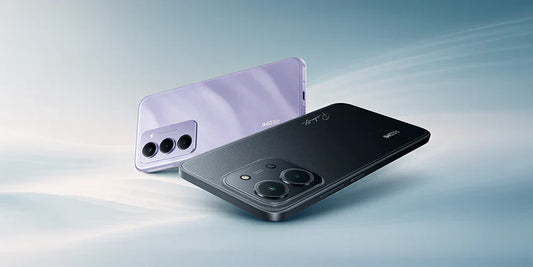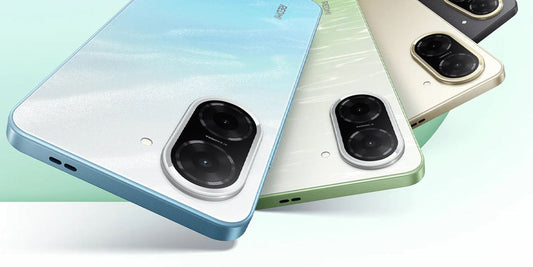





It's time for the Redmi Note 15 series. Which smartphone variant should you choose?
For more than a decade, the Redmi Note series has been a cornerstone of Xiaomi’s global strategy, serving as a bridge between the budget segment and the company’s flagship line. The launch of the Redmi Note 15 family for 2026, however, is more than just another iteration. It’s the moment Xiaomi pushes the boundaries of value, bringing premium-grade solutions into a mass-market product: silicon–carbon (Si-C) cells, flagship-level brightness on 6.83-inch displays, and the highest water-resistance certification, IP69K.
This year’s portfolio includes five variants that precisely match different user needs—from fans of slim design to enthusiasts of mobile photography and record-breaking battery life.
Key technical specifications
| Feature | Redmi Note 15 (LTE) | Redmi Note 15 5G | Redmi Note 15 Pro (LTE) | Redmi Note 15 Pro 5G | Redmi Note 15 Pro+ 5G |
| Processor | Helio G100-Ultra | Snapdragon 6 Gen 3 | Dimensity 7400-Ultra | Dimensity 7400-Ultra | Snapdragon 7s Gen 4 |
| Display (AMOLED) | 6.77" FHD+ | 6.77" FHD+ | 6.83" 1.5K | 6.83" 1.5K | 6.83" Curved 1.5K |
| Peak brightness | 3000 nits | 3200 nits | 3200 nits | 3200 nits | 3200 nits |
| Main camera | 108 MP | 108 MP (OIS) | 200 MP (OIS) | 200 MP (OIS) | 200 MP (HP3 Pro) |
| Battery (Si-C) | 6000 mAh | 5520 mAh (Slim) | 6500 mAh | 6580 mAh | 6500 mAh |
| Charging | 33W | 45W | 67W | 80W | 100W HyperCharge |
| IP rating | IP64 | IP66 | IP66 | IP68 | IP68 / IP69K |
Build and ergonomics: “Redmi Titan” architecture
For the 2026 generation, Xiaomi moved away from a purely aesthetic approach and introduced the so-called Redmi Titan Structure. This new construction philosophy has earned the prestigious SGS 5-stars Premium Performance certification. The Pro models are reinforced around the mainboard area and the frame corners, which now act as dedicated crumple zones.
The standout element is durability. While the base Redmi Note 15 focuses on high-quality polymers, the Pro 5G and Pro+ 5G models bring Corning Gorilla Glass Victus 2 to the front. Still, water resistance steals the spotlight. The Pro+ 5G supports IP69K, meaning protection not only against full immersion but also against high-pressure jets of hot water. Xiaomi also introduced Wet Touch 2.0, enabling precise screen control even when the panel is completely wet or your hands are damp.

Displays: the 6.83" standard and eye protection
Xiaomi has broken away from the long-standing 6.67-inch standard. The Pro models get impressive 6.83-inch CrystalRes AMOLED panels with 1.5K resolution (around 1280p). It’s a sweet spot—about 25% sharper than standard FHD+ without putting a drastic strain on battery life.
Eye-care parameters are a key selling point in 2026. Xiaomi uses brightness control via 3840Hz PWM. In practice, this means less tiring flicker at low brightness—especially important for nighttime browsing. Peak brightness of 3200 nits ensures HDR10+ content stays fully readable even in direct summer sunlight, something that until recently was reserved for flagships costing twice as much.
Performance and cooling
This year’s processor split is tightly aligned with target users and AI capabilities:
• Snapdragon 7s Gen 4: The Pro+ chip is designed with AI workloads in mind. It accelerates features such as real-time translation and generative object removal in HyperOS 2.0.
• MediaTek Dimensity 7400-Ultra: Powering the Pro models, this 4nm SoC is known for excellent efficiency. With an enlarged vapor chamber (VC) exceeding 4000 $mm^2$, the phone avoids overheating even during hours-long gaming sessions.
• Memory: 8GB or 12GB of fast LPDDR5 has become standard in the Pro line, and paired with UFS 3.1 storage it eliminates slowdowns when switching between demanding apps.
Imaging system: camera potential
The highlight of the Pro series is a 200MP sensor (Samsung ISOCELL HP3 Pro). This isn’t just a marketing number—the key is Tetra2pixel, which combines 16 adjacent pixels into one large “super pixel.” The result is night photos with very low noise and tonal range that rivals advanced compact cameras.
Another new feature is lossless sensor zoom. Thanks to the high resolution, cropping the center of the sensor enables up to 4× zoom that stays remarkably close to dedicated telephoto optics in detail. For video creators, Xiaomi adds support for recording in 4K with full hybrid stabilization (OIS + EIS), reducing shake even while walking.

Energy breakthrough: silicon–carbon cells
The biggest innovation in the Redmi Note 15 series is the move away from classic lithium-ion batteries toward cells with a silicon–carbon (Si-C) anode. This technology dramatically increases energy density without enlarging the phone.
As a result, the Redmi Note 15 Pro 5G is only 7.96mm thick yet delivers a record 6580mAh capacity. Meanwhile, the Redmi Note 15 5G, at just 7.4mm thick, still fits a 5520mAh battery. The 100W HyperCharge system in the Pro+ is supported by a dedicated power-management chip, Surge P2. It monitors cell temperature in real time, helping the battery retain 80% of its original capacity even after 1600 full charging cycles (around 5–6 years of intensive use).
Software and ecosystem: HyperOS 2.0
All models debut with HyperOS 2.0, based on Android 15/16. Xiaomi focuses on deep AI integration (HyperAI), which shows up in several areas:
• Resource management: The system predicts user habits and preloads frequently used apps into RAM.
• AI Image Engine: Automatic detail reconstruction during digital zoom, plus intelligent reflection removal (e.g., photos taken through glass).
• Security: Hardware-level isolation of sensitive data (passwords, biometrics) in a dedicated security module.
For the Pro line, Xiaomi declares 4 major Android version upgrades and 5 years of security patches, making these phones a long-term investment.

Summary and buying recommendation
The Redmi Note 15 series is the most complete generation in the brand’s history. The right model depends on your priorities:
1. Redmi Note 15 Pro+ 5G: For enthusiasts—curved display, the fastest charging, and IP69K durability.
2. Redmi Note 15 Pro 5G: The best all-rounder for demanding users. Record 6580mAh battery and IP68.
3. Redmi Note 15 Pro (LTE): Ideal if you don’t need 5G but want a great 1.5K display and a 200MP camera.
4. Redmi Note 15 5G: A modern pick in a slim form factor (Slim version).
5. Redmi Note 15 (LTE): The value king. A huge 6000mAh battery and a large 6.77" display at the lowest price.
Once again, Xiaomi proves it can integrate flagship-grade components into a mass-market product while keeping prices accessible. The Redmi Note 15 series is, without a doubt, the king of value.