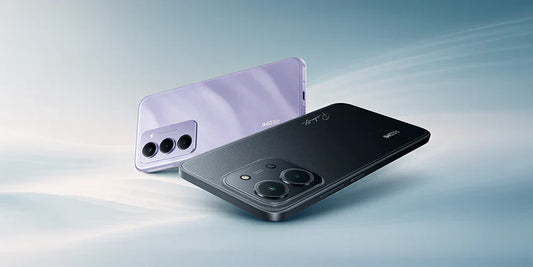





Why can't we remember phone numbers? Is it because of convenience or progress?
Just twenty years ago, most of us could recite a parent’s, a close friend’s, or even a bank’s contact number without much trouble. Today, many people do not even remember their own phone number — they check it in settings or contacts. Is this a sign of laziness, a symptom of forgetting, or perhaps the effect of a technological revolution that relieves our brain… but also, in a way, makes it lazy? In this guide, we will look at memory mechanisms, the impact of technology on our ability to remember, and what we can do to regain control over our own memory.
What happens to memory in the smartphone era
The human brain is an extremely flexible organ — it learns, adapts, and develops. However, the condition for its development is use — cognitive effort, repetition of information, active recall of data. When we move most data to external devices, a phenomenon known in the literature as “cognitive offloading” occurs — that is, transferring some of our cognitive functions (e.g., remembering) to technological tools.
An example could be a situation where a phone number is not stored in the head because it is available on a smartphone — the brain concludes that it does not have to consolidate it. In psychology there is the term “Google effect” — the tendency for people to remember information worse when they know they will be able to check it online.
That means that it is not so much that we “do not want to remember,” but that we “do not have to remember.”
Does convenience kill remembering?
On the one hand, technology provides huge convenience: we no longer have to remember dozens of numbers, addresses, dates, passwords — the smartphone, apps, and the cloud do it for us. Thanks to that, we can devote attention to other tasks. However, studies have shown that excessive reliance on technology can lead to weakening of certain cognitive functions — including remembering.
On the other hand, there are also arguments that offloading “remembering” to devices can be beneficial — it allows the brain to focus on other, more important tasks. For example, one study showed that people using digital reminders did better with less important information when they offloaded more important information to the device.
As a result: convenience can be an ally of our memory — but also its opponent if we completely give up active remembering.

Why a phone number stopped being “worth remembering”
There are several reasons why a phone number — once a key piece of information — has lost importance.
-
Widespread access to contacts: the phone has all numbers in the contact book — we do not have to remember them ourselves.
-
A change in the form of communication: we increasingly use messengers (WhatsApp, Messenger) instead of calling — the number does not have to be in our head.
-
Many devices, many accounts: numbers change (moving, a new carrier, roaming), so memorizing loses stability.
-
A change in the meaning of information: in the internet era, the key becomes having access to information, not storing it.
These factors make the brain simply not treat a number as something worth consolidating.
What happens in the brain? Mechanisms and science
Memory is a multi stage process: encoding information, storing it, and retrieving it. When information is easily available (e.g., on a phone), the brain may apply an energy saving strategy: “I do not need to consolidate this”.
Studies by neurologist Sama Gilbert at UCL suggest that frequent reliance on external devices can reduce activity in brain areas responsible for remembering — the hippocampus may even physically shrink when remembering is less demanded. Another aspect is the more frequent occurrence of automatic reminders (alarms, notes, contacts on the phone) — which limits our practice of remembering. In other words: the brain “fires up” fewer of its own mechanisms because it knows there is external support.
Is it a problem or an adaptation?
It is not unambiguously negative — it is rather an adaptation to new conditions. You can look at this change as a shift from craft like memorization to “extended memory” thanks to technology.
If we use tools well — our cognitive capabilities can expand, because we do not waste time remembering trivial things and we can devote attention to higher order tasks.
However, if we completely stop exercising memory — problems may appear: difficulty remembering new information, weaker concentration, greater dependence on devices.
Practical plan: how to regain control over memory
If you feel that your phone number may be just one of many things you do not remember — here is a plan of action:
a) Set information priorities
Ask yourself: which information is really worth remembering? For example: the contact number of the closest person, important dates, passwords (but without security risk).
b) Memory training every day
• Spend 5 minutes a day recalling, for example, a contact number or an address.
• Use the association method: connect the number with an image, an event, a story.
• Try without looking at the phone — if you forget, check it, but try again a few days later.
c) Use technology, but with a boundary
• Save the number on the phone, but also say it out loud and memorize it.
• Make a short list of information you prefer to remember yourself (e.g., 5–10 contacts).
• Turn off automatic reminders for less important things — recalling on your own exercises memory.
d) Use devices consciously
• Do a “digital detox” from time to time — a day without checking contacts on your phone can be healthy.
• Instead of immediately checking the number on your phone, try to recall it; if you cannot - check it and memorize it.
• Use the “favorite contacts” function or a physical list on the fridge — manual training works differently than a touchscreen.
e) Track progress
• Write down how many numbers you can recite from memory at the start and check again each week.
• Pay attention to how you feel: do you feel more confident without staring at your phone?
• If you notice improvement — great! If not — try increasing the scope of memory training.
Examples of use in everyday life
– At work: when you remember a number without looking at your phone, it makes a better impression.
– In emergencies: lack of access to a phone or network is not a barrier.
– In interpersonal relationships: remembering a number, a name, or a detail shows attention and respect.
– In digital health: memory training is an important element of brain training in a world of excess stimuli.

Summary
We do not memorize phone numbers not because we are starting to forget everything — but because we have learned that technology stores them for us. Comfort has won over habit. And that is okay — provided that we consciously choose what we want to remember and what we entrust to the device.
True strength is not remembering everything — but knowing what should be remembered, and taking care of our own cognitive abilities so that in a situation where technology fails, we are not left stranded. So turn your phone not into a contact filing cabinet, but into a partner that supports your memory, not replaces it.